
· by Michael Blair, Nashville's Kitchen & Bath
A crack that runs straight up the inside corner of a tiled shower, or along the line where wall tile meets the tub, is one of the things people ask us about most. Regrouting it rarely holds, because grout was the wrong material for that joint from the start. Below is what the tile and sealant manufacturers call for at corners and edges, why it works when grout does not, and how we fill those joints when we build or repair a tile shower.
Should shower corners be grouted or caulked?
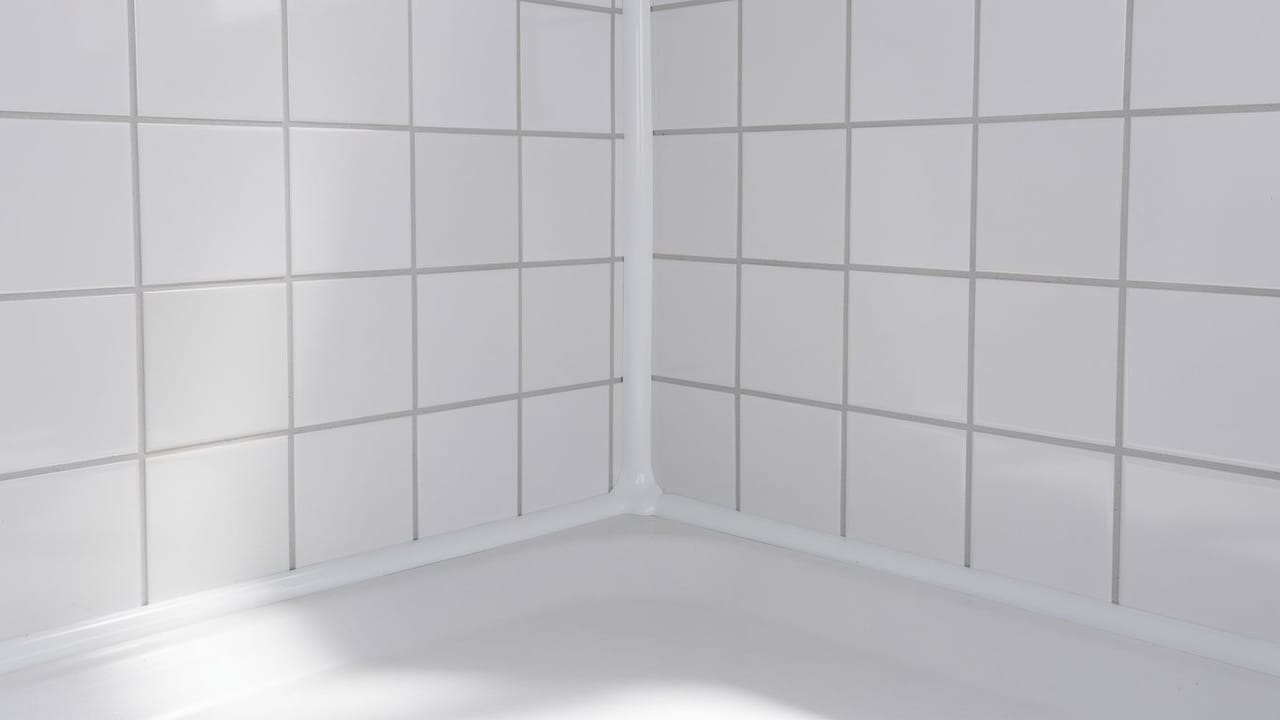
Shower corners should be filled with a flexible sealant, not grout. Every inside corner where two tiled walls meet, and every line where wall tile meets the floor, the tub or a shower pan, is a change of plane, and tile installation treats each one as a movement joint. The International Masonry Institute’s detailing note on tile movement joints says perimeter joints are required at every change in plane and at the edges where the tile stops.
The manufacturers put the same rule in their own documents. LATICRETE’s data sheet for its preformed shower corners requires movement joints around the perimeter, against restraining surfaces and at penetrations, spaced as the Tile Council of North America’s method EJ171 describes, and filled with sealant over a backer rod. Grout is for the joints between tiles on one flat surface. Where the surface turns a corner or meets something else, the joint gets sealant.
Why does grout crack in shower corners first?
Grout cracks in the corners first because the surfaces on either side of a corner move separately, and grout cannot move with them. It is a cement product, hard and rigid, made to fill a gap that stays the same width. Wood framing swells and shrinks a little as the seasons change, a tub flexes under the weight of water and a person, and a floor does not move in step with the wall above it. All of that movement ends up at the corner, so the grout there splits in a straight line while the joints on the flat wall stay whole.
A sealant made for tile is built to take that movement. Custom Building Products’ data sheet for its 100% silicone sealant names coves, corners, changes in plane and expansion joints as its uses, along with tubs, showers and sinks, and states that it conforms to ASTM C920 Class 25 and is rated for 25 percent joint movement in either direction under ASTM C719. A cracked corner is also an opening right where water runs, which is why the waterproofing behind the tile matters as much as the tile, as our comparison of tile and acrylic showers explains.
Can you caulk over grout in a shower?
Caulking over grout does not last. A thin bead smeared over a cracked corner sticks to loose material, has almost no depth, and splits again along the same line. A movement joint is meant to be open: the grout raked out to the bottom of the joint, the joint cleaned, and a foam backer rod pressed in behind the sealant. The Custom data sheet asks for surfaces free of contamination, including any old caulk or sealant, and says the sealant goes in only after the grout has cured.
The backer rod sets the shape of the bead. Custom’s sheet places the rod so the sealant ends up about half as deep as the tile is thick, and it limits the joint to half an inch deep and one inch wide. The Masonry Institute’s note explains why the rod is there at all: it stops the sealant from bonding to the back of the joint, so the bead holds only the two tile edges and can stretch between them instead of tearing.
For a corner that has already cracked, the repair is to cut the grout out along its full height, clean the joint, set the rod and run the sealant, not to add another layer on top.
Where sealant goes in a shower, and its limits
Sealant goes in every place a shower’s tile changes plane or stops against something else. In a shower we build, that means each inside corner from the floor to the top of the tile, the line where the walls meet the shower pan or tub, the edges where tile ends against another material, and the pipes that come through the tile, which the LATICRETE sheet lists among the places a movement joint is required. Grout fills the joints across each flat wall and the floor, and nowhere else.
Silicone has limits to know before it goes in. The Custom sheet says it cannot be painted, should not be applied below 40°F, and needs about 24 hours at 70°F to cure, so a newly sealed shower stays out of use for at least a day. When a bead wears or stains, it is cut out and replaced, for the same reason it never goes over old caulk.
If the corners of a shower in Nashville or nearby keep cracking, or the bead along a tub has darkened, send us a photo of the corner. We will tell you whether it needs a new joint, or whether water has already reached behind the tile and the fix belongs in a bathroom remodel.
Sources
- International Masonry Institute, detailing series: tile movement joints (EJ171) — Perimeter movement joints are required at all changes in plane and terminations of tile; the backer rod keeps sealant from bonding on three sides
- LATICRETE, HYDRO BAN Inside & Outside Corners data sheet — Movement joints required at perimeters, restraining surfaces and penetrations at the intervals in TCNA Handbook method EJ171, using sealant and backer rod
- Custom Building Products, Commercial 100% Silicone Sealant technical data sheet (TDS-100) — For coves, corners, changes in plane and around tubs and showers; ASTM C920 Class 25, ±25% movement (ASTM C719); installed after grout cures over a backup strip at half the tile thickness; not paintable; not below 40°F; about 24 hours to cure at 70°F
FAQ
Grout or Caulk in Shower Corners, and Why — questions
What is the difference between grout and caulk in a shower?
Grout is a rigid cement product that fills the joints between tiles on one flat surface. Caulk, or sealant, is flexible and goes where the tile changes plane or stops: inside corners, the line along the tub or pan, and around pipes. A silicone made for tile is rated to move with the joint instead of cracking.
Can you replace grout with caulk in a shower?
In the corners and along the tub or pan, yes, and that is where sealant belongs. The grout is cut out of the joint, the joint is cleaned, a backer rod goes in, and the sealant goes over it. On the flat walls and the floor, keep grout; sealant there is a patch, not a repair.
Will caulk stick to grout?
Not well enough to rely on. The sealant maker we cite asks for surfaces free of contamination and old caulk, and cracked grout is loose material. A bead laid over grout also has no depth to stretch. Cut the grout out of the joint so the sealant bonds to two clean tile edges over a backer rod.
When do you use grout vs caulk?
Use grout between tiles on the same flat surface, where the joint stays the same width. Use a flexible sealant wherever the tile changes plane or meets something else, such as inside corners, the tub or pan edge, and pipe penetrations. Tile manufacturers reference the industry’s movement-joint method, EJ171, for where these joints go.
How long should shower caulk cure before you use the shower?
For the 100 percent silicone sealant we cite, the maker gives a cure of about 24 hours at 70°F and says not to apply it below 40°F. We leave a newly sealed shower out of use for at least a full day, and we make sure the bathroom is warm enough before the sealant goes in.